Williamsburg has shifted from a niche Brooklyn alternative into one of New York City's most in-demand places to stay - but the neighborhood still operates on its own rhythm, distinct from Midtown or Downtown Manhattan. This guide compares 5 hotels across Williamsburg's different price points and positions, covering what the area actually delivers for visitors who need both Brooklyn access and a workable connection to the rest of the city.
What It's Like Staying in Williamsburg
Williamsburg sits directly across the East River from Manhattan's Lower East Side, connected by the Williamsburg Bridge and multiple subway lines - the L train runs through the heart of the neighborhood and drops you at Union Square in around 20 minutes. The area is walkable internally, with most hotels, restaurants, and venues concentrated between the waterfront and Bedford Avenue, but distances to Midtown Manhattan are real: expect around 40 minutes by subway to Times Square. Crowds peak on weekends, especially around the waterfront and Bedford Avenue strip, while weekday mornings are noticeably quieter.
Pros:
- Direct L train access to Manhattan with frequent service during peak hours
- Dense concentration of independent restaurants, bars, and music venues within walking distance
- East River Ferry offers a scenic and practical connection to Midtown and Lower Manhattan
Cons:
- L train disruptions are common on weekends, forcing longer reroutes via the J, M, or Z lines
- Weekend nightlife on Bedford Avenue generates significant noise until late, affecting lighter sleepers
- No major tourist attractions within the neighborhood itself - sightseeing requires daily transit into Manhattan
Why Choose a Hotel in Williamsburg
Hotels in Williamsburg consistently price below comparable properties in Midtown or the Financial District, making the neighborhood a practical base for visitors who want New York City access without paying Manhattan premiums. Room sizes tend to run larger than equivalent Manhattan hotels at the same price point, partly because several Williamsburg properties occupy converted industrial buildings with generous floor plates. The trade-off is that you are always one transit step away from central Manhattan, which adds friction to itineraries built around Midtown sightseeing.
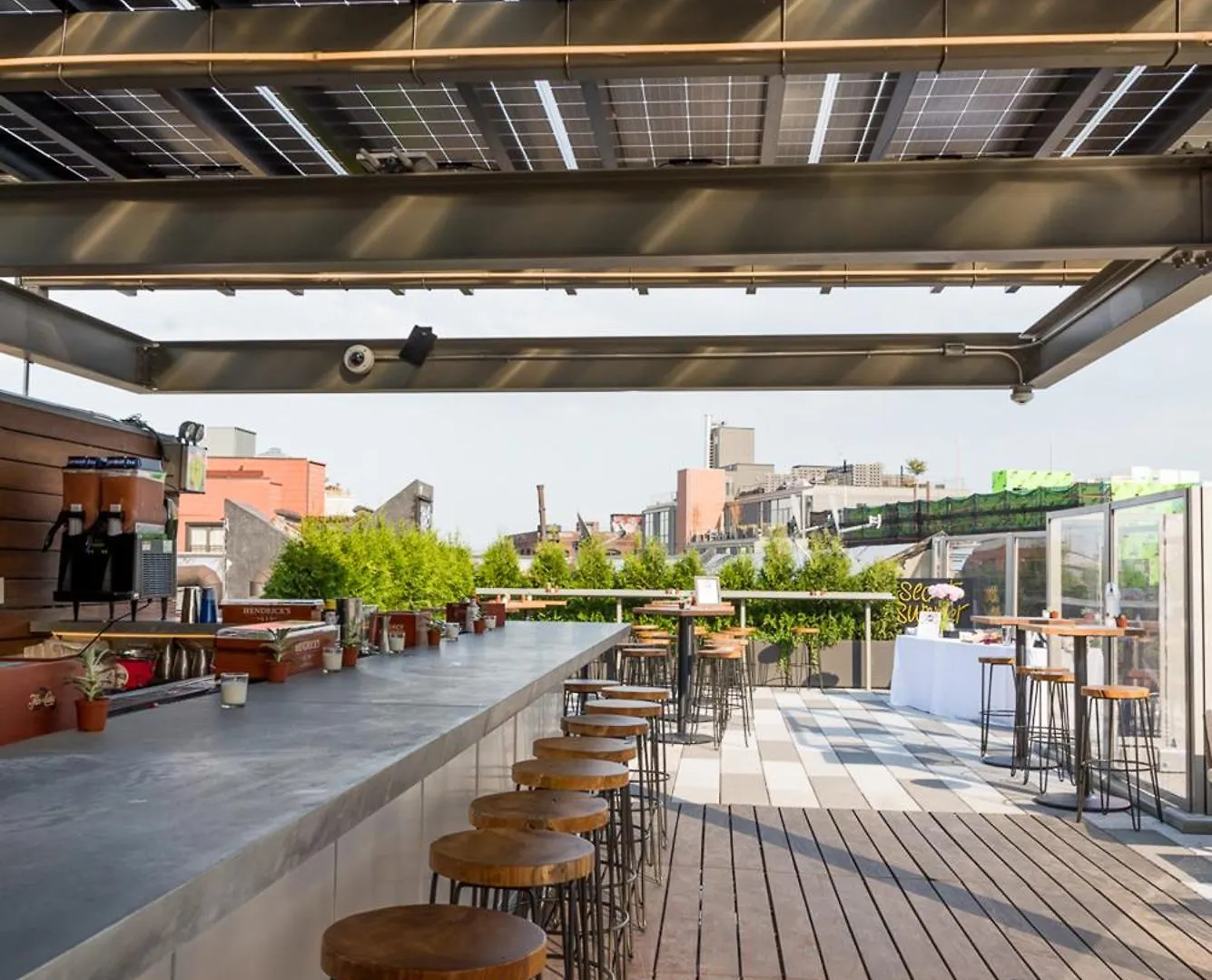
The hotel stock here skews toward design-forward independent and lifestyle brands rather than traditional chain properties - you will find converted warehouses, rooftop bars, and locally sourced restaurant concepts more often than standard business hotel configurations. Rates are typically around 30% lower than comparable-quality hotels in Midtown Manhattan, which meaningfully changes the value calculation for multi-night stays.
Pros:
- Lower nightly rates than Manhattan at equivalent or higher design and room quality
- Hotels frequently incorporate neighborhood character - converted factories, local restaurant concepts, and waterfront positioning
- Brooklyn Brewery, Music Hall of Williamsburg, and East River State Park are accessible on foot from most properties
Cons:
- No hotel in Williamsburg is within walking distance of major Manhattan landmarks - transit is always required
- Lifestyle hotel formats prioritize aesthetics, which can mean less conventional business amenities in some properties
- Parking is limited and expensive near the waterfront; car-dependent visitors face real logistical friction
Practical Booking & Area Strategy
The waterfront strip along Kent Avenue and Wythe Avenue gives the best positioning in Williamsburg - properties here are within a short walk of the East River Ferry at North Williamsburg and have direct skyline views of Manhattan. Bedford Avenue is the commercial spine and offers the most walkable access to restaurants and transit, while properties a few blocks east toward Union Avenue are quieter but require a short walk to the L train at Bedford Av station. The L train at Bedford Av is the critical transit node - hotels within 5 minutes on foot of this stop have materially better Manhattan access than those relying solely on the J, M, or Z lines at Marcy Av, which serve fewer destinations efficiently.
Key things to do in Williamsburg include visiting Brooklyn Brewery (free tours on weekends), the outdoor market at Artists & Fleas, live shows at Music Hall of Williamsburg, and the waterfront park at East River State Park. Smorgasburg, the open-air food market, runs on Saturdays at Marsha P. Johnson State Park and draws large crowds between April and October - book at least 6 weeks ahead for stays during this period, as hotel availability compresses quickly. For visitors whose itinerary is Manhattan-heavy, the ferry is worth considering as a supplement to the subway, particularly for Lower Manhattan or Midtown East destinations, as it avoids underground transfers entirely.
Best Value Stays in Williamsburg
These properties deliver strong positioning and functional amenities at rates that reflect Williamsburg's pricing advantage over Manhattan, without sacrificing the neighborhood's design-forward character.
-
1. Pod Brooklyn
Show on map


 Check-infrom 15:00 until 23:59Check-outuntil 12:00
Just a few rooms left at the best rate!
fromUS$ 93
-
2. Arlo Williamsburg
Show on map


 Check-infrom 15:00 until 23:59Check-outuntil 11:00
Just a few rooms left at the best rate!
fromUS$ 161
Best Premium Stays in Williamsburg
These four-star and design-forward properties go beyond standard amenities, offering waterfront positioning, rooftop bars, converted industrial architecture, and full-service dining - at rates that still undercut comparable Manhattan hotels.
-
3. Wythe Hotel
Show on map


 Check-infrom 15:00 until 23:59Check-outuntil 11:00
Hurry – almost gone at this price!
fromUS$ 266
-
4. The Hoxton, Williamsburg
Show on map


 Check-infrom 14:00 until 23:59Check-outuntil 12:00
Hurry – almost gone at this price!
fromUS$ 387
-
5. Hotel Indigo - Williamsburg - Brooklyn By Ihg
Show on map


 Check-infrom 15:00 until 23:59Check-outuntil 11:00
Rooms filling fast – secure the best rate!
fromUS$ 248
Smart Travel & Timing Advice for Williamsburg
Williamsburg operates on a distinctly seasonal calendar. The neighborhood is at its most active between May and October, when Smorgasburg runs every Saturday, East River State Park fills with visitors, and rooftop bars at properties like Wythe Hotel reach capacity on weekends. Book at least 6 weeks ahead for stays between June and September - this is when hotel rates in Williamsburg peak and availability at waterfront properties compresses fastest. The quietest and most affordable window is January through March, when rates drop noticeably and the neighborhood's restaurant and bar scene remains active even without the summer crowds.
Three nights is a practical minimum for Williamsburg: one day to orient around the neighborhood and waterfront, one day for a full Manhattan itinerary via L train or ferry, and one day to cover Brooklyn-specific destinations like Brooklyn Bridge Park or DUMBO, which are 20 to 25 minutes by transit or bike. Avoid last-minute booking in October, when fall foliage tourism and the NYC Marathon (first Sunday of November) compress availability across all of Brooklyn. For the best rate-to-quality ratio, Tuesday and Wednesday check-ins consistently yield lower rates than weekend arrivals at every property in this comparison.